Introduction
Men experiencing symptoms of low testosterone are increasingly searching for effective, long-term hormonal solutions. Among the most discussed options are human chorionic gonadotropin (hCG) and testosterone replacement therapy (TRT). Although both approaches aim to address testosterone deficiency, they work through fundamentally different mechanisms and carry distinct implications for fertility, hormonal balance, and long-term health.
This comprehensive guide provides an in-depth comparison of human chorionic gonadotropin vs TRT for men, explaining how each therapy works, who may benefit most, and how to choose the right approach under medical supervision.
Understanding Testosterone Deficiency in Men
Low testosterone, or male hypogonadism, affects millions of men worldwide. Symptoms often include:
- Chronic fatigue
- Reduced libido and erectile dysfunction
- Loss of muscle mass
- Increased body fat
- Mood changes and depression
- Cognitive decline
The underlying causes of testosterone deficiency vary and may include aging, lifestyle factors, metabolic disorders, or dysfunction of the hypothalamic-pituitary-gonadal (HPG) axis.
Correctly identifying the cause of low testosterone is critical when choosing between human chorionic gonadotropin for men and TRT.
What Is Human Chorionic Gonadotropin (hCG)?
Human chorionic gonadotropin is a peptide hormone structurally similar to luteinizing hormone (LH). In men, LH plays a key role in stimulating testosterone production by activating Leydig cells in the testes.
How hCG Works in Men
- Mimics endogenous LH
- Stimulates natural testosterone production
- Maintains intratesticular testosterone
- Preserves spermatogenesis
Unlike TRT, hCG does not replace testosterone. Instead, it encourages the body to produce testosterone naturally.
What Is Testosterone Replacement Therapy (TRT)?
Testosterone replacement therapy involves administering exogenous testosterone to raise serum testosterone levels directly. TRT is available in multiple forms, including:
- Injectable testosterone esters
- Transdermal gels and patches
- Subcutaneous pellets
TRT is commonly prescribed for men with clinically confirmed hypogonadism.
Core Difference: Mechanism of Action
hCG for Men
- Acts upstream in the HPG axis
- Stimulates testicular testosterone production
- Preserves hormonal signaling pathways
TRT
- Bypasses natural hormone production
- Suppresses LH and FSH secretion
- Shuts down endogenous testosterone synthesis
This distinction forms the foundation of the hCG vs TRT debate.
Human Chorionic Gonadotropin vs TRT: Side-by-Side Comparison
| Category | hCG for Men | TRT |
|---|---|---|
| Testosterone source | Endogenous | Exogenous |
| LH/FSH activity | Maintained | Suppressed |
| Fertility | Preserved | Often impaired |
| Testicular size | Maintained | Often reduced |
| Hormonal rhythm | Physiologic | Artificial |
| Long-term reversibility | High | Variable |
Testosterone Levels: Stability vs Physiology
TRT delivers predictable serum testosterone levels, often resulting in rapid symptom improvement. However, this stability comes at the cost of natural hormone regulation.
hCG, on the other hand, produces testosterone through physiologic pathways, leading to:
- More natural hormonal fluctuations
- Better preservation of endocrine function
- Lower risk of long-term suppression
Fertility and Reproductive Health
TRT and Fertility
TRT suppresses LH and FSH, leading to:
- Reduced sperm production
- Decreased intratesticular testosterone
- Potential infertility
In many cases, men on TRT require additional medications to restore fertility.
hCG and Fertility Preservation
Human chorionic gonadotropin for men:
- Maintains spermatogenesis
- Preserves testicular volume
- Supports future reproductive potential
For men planning children, hCG is often the preferred first-line option.
Testicular Health and Intratesticular Testosterone
Intratesticular testosterone levels are essential for sperm production and testicular integrity.
- TRT significantly lowers intratesticular testosterone
- hCG maintains or restores it
This explains why testicular atrophy is common on TRT but rare with hCG-based protocols.
Estrogen Balance and Aromatization
Both hCG and TRT can increase estradiol levels through aromatization.
hCG
- Estrogen increase is usually dose-dependent
- Often manageable with proper monitoring
TRT
- Can lead to supraphysiologic testosterone levels
- Higher risk of estrogen-related side effects
Balanced estrogen is crucial for libido, mood, and cardiovascular health.
Cardiovascular Considerations
Current evidence suggests:
- Properly managed TRT does not significantly increase cardiovascular risk
- hCG may offer a more physiologic alternative with potentially lower risk
However, both therapies require individualized dosing and monitoring of hematocrit, lipids, and blood pressure.
hCG vs TRT for Aging Men
Age-related testosterone decline presents unique challenges.
- TRT offers fast symptom relief
- hCG supports aging testes without complete shutdown
Many clinicians favor hCG in middle-aged men with functional testes and mild to moderate testosterone deficiency.
Use of hCG with TRT
Modern hormone optimization protocols often combine TRT with hCG to achieve the best of both approaches.
Benefits of Combination Therapy
- Maintains fertility
- Prevents testicular atrophy
- Preserves intratesticular testosterone
This strategy is especially popular among younger men requiring TRT.
hCG vs TRT in Secondary Hypogonadism
Secondary hypogonadism originates from pituitary or hypothalamic dysfunction rather than testicular failure.
In such cases:
- hCG is often more effective
- TRT may mask underlying dysfunction
Restoring natural signaling is usually preferred when possible.
Who Should Choose hCG Over TRT?
Human chorionic gonadotropin for men may be ideal for:
- Men desiring fertility
- Men with secondary hypogonadism
- Men seeking reversible treatment
- Men prioritizing long-term endocrine health
Who Should Choose TRT?
TRT may be appropriate for:
- Primary testicular failure
- Severe hypogonadism
- Non-responsive testes
- Men not concerned with fertility
Safety and Monitoring
Both hCG and TRT require:
- Baseline hormone panels
- Regular follow-up labs
- Medical supervision
Self-medication significantly increases risk.
Psychological and Quality-of-Life Effects
Many men report:
- Improved mood and confidence on TRT
- More stable emotional state on hCG
Individual response varies, emphasizing the need for personalized treatment.
Long-Term Sustainability
TRT
- Often lifelong
- Requires ongoing suppression management
hCG
- Can be cyclical or long-term
- Preserves future treatment options
From a sustainability perspective, hCG offers greater flexibility.
Cost and Accessibility
- TRT is widely available and often insurance-covered
- hCG availability varies by region and regulation
Cost should be evaluated alongside long-term health impact.
Evidence-Based Medical Perspective
Clinical literature increasingly supports:
- hCG as a monotherapy in selected men
- Combination therapy in fertility-conscious TRT patients
The “one-size-fits-all” approach is outdated.
Human Chorionic Gonadotropin vs TRT: Final Verdict
There is no universal winner in the hCG vs TRT for men comparison.
hCG excels in:
- Fertility preservation
- Testicular health
- Physiologic hormone production
TRT excels in:
- Rapid symptom relief
- Severe hypogonadism
- Predictable testosterone levels
The optimal approach depends on medical diagnosis, life goals, and long-term health priorities.
✅ FAQ — Human Chorionic Gonadotropin vs TRT for Men
1. What is the main difference between hCG and TRT for men?
The main difference is that hCG stimulates natural testosterone production, while TRT replaces testosterone externally, suppressing the body’s own hormone production.
2. Does human chorionic gonadotropin increase testosterone in men?
Yes. Human chorionic gonadotropin mimics luteinizing hormone (LH), stimulating the testes to produce testosterone naturally.
3. Is hCG better than TRT for fertility?
In most cases, yes. hCG preserves spermatogenesis, while TRT often suppresses sperm production and may lead to infertility.
4. Can men use hCG instead of testosterone replacement therapy?
Some men can use hCG as a standalone therapy, especially those with secondary hypogonadism or fertility concerns. A medical evaluation is essential.
5. Does TRT cause testicular shrinkage?
TRT can reduce testicular size due to suppression of LH and FSH. hCG helps maintain testicular function and volume.
6. Can hCG and TRT be used together?
Yes. Many modern protocols combine TRT with hCG to maintain fertility and prevent testicular atrophy.
7. Which is safer: hCG or TRT?
Both are considered safe when prescribed and monitored by a physician. Safety depends on dosing, medical supervision, and individual health factors.
8. Does hCG raise estrogen levels in men?
hCG can increase estrogen indirectly through testosterone aromatization, but this effect is usually dose-dependent and manageable.
9. Does TRT permanently shut down natural testosterone production?
TRT suppresses natural testosterone production while in use. Recovery is possible in some men after discontinuation, but not guaranteed.
10. How long does it take for hCG to work in men?
Some men notice hormonal changes within a few weeks, but full effects may take several months depending on individual response.
11. Is hCG effective for age-related low testosterone?
hCG may be effective in men with functional testes and mild to moderate age-related testosterone decline.
12. Who should choose TRT over hCG?
TRT is often preferred in men with primary testicular failure or severe hypogonadism where the testes cannot respond to stimulation.
13. Does hCG work if testosterone levels are very low?
hCG can work if low testosterone is caused by inadequate LH signaling. It may be less effective in primary testicular failure.
14. Is hCG approved for use in men?
hCG is FDA-approved for certain male conditions, including hypogonadism and infertility, when prescribed by a physician.
15. Can hCG help restore fertility after TRT?
Yes. hCG is commonly used to help restore spermatogenesis in men who have previously used TRT.
16. Does hCG improve libido in men?
By increasing endogenous testosterone, hCG may improve libido, energy levels, and overall well-being in some men.
17. Which therapy is more natural: hCG or TRT?
hCG is considered more physiologic because it stimulates the body’s own testosterone production rather than replacing it.
18. Is long-term hCG use safe for men?
Long-term hCG use may be safe under medical supervision with regular hormone and health monitoring.
19. Do men on TRT need hCG?
Not all men on TRT require hCG, but it is commonly recommended for those concerned about fertility or testicular health.
20. How do doctors decide between hCG and TRT?
The decision is based on hormone levels, fertility goals, age, type of hypogonadism, and overall health profile.
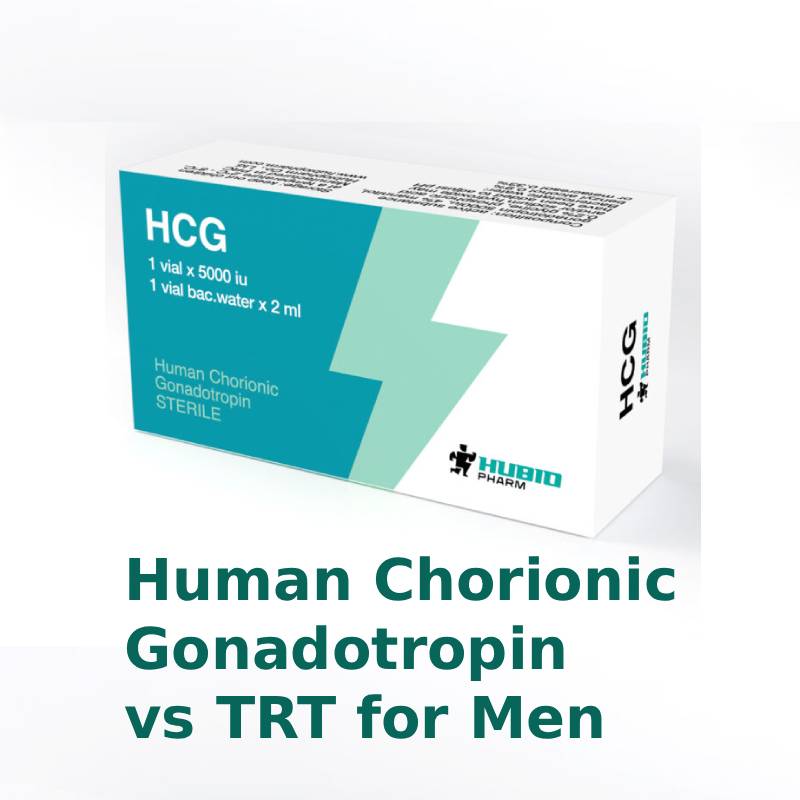
Human Chorionic Gonadotropin (hCG) 5000 IU
Looking for a reliable solution for human chorionic gonadotropin for men? Our hCG Gonadotropin 5000 IU is selected for men focused on testosterone support, fertility preservation, and consistent product quality.
View hCG 5000 IUConclusion
Choosing between human chorionic gonadotropin and testosterone replacement therapy is not merely about raising testosterone levels. It is about preserving hormonal health, fertility, and quality of life.
For many men, hCG represents a powerful, physiologic alternative or complement to TRT. A doctor-guided, individualized plan remains the cornerstone of safe and effective hormone therapy.