
Growth hormone has become one of the most discussed topics in fitness, bodybuilding, and longevity conversations. Many people associate it with lean muscle mass, recovery, and improved body composition, yet there is also widespread misunderstanding about what growth hormone can realistically achieve.
Unlike fast-acting muscle-building agents, growth hormone works indirectly and gradually, supporting the body’s natural repair systems rather than forcing immediate hypertrophy. This distinction is critical. When expectations are aligned with physiology, growth hormone can be understood as a long-term optimization factor, not a shortcut.
This pillar article explores growth hormone for muscle mass from a science-based and educational perspective, covering how it works, why it matters, what it can and cannot do, and how it fits into overall muscular development.
This article is for educational purposes only. Growth hormone is a prescription medication in many countries and should only be used under qualified medical supervision.
What Is Growth Hormone?
Human Growth Hormone (HGH) is a peptide hormone produced by the pituitary gland. It plays a central role in:
- Growth and development during youth
- Muscle and tissue repair
- Bone density maintenance
- Fat metabolism
- Cellular regeneration
HGH is released in pulses, not continuously, and its production follows circadian rhythms. The largest natural pulses occur during deep sleep, highlighting the close relationship between growth hormone, recovery, and metabolic health.
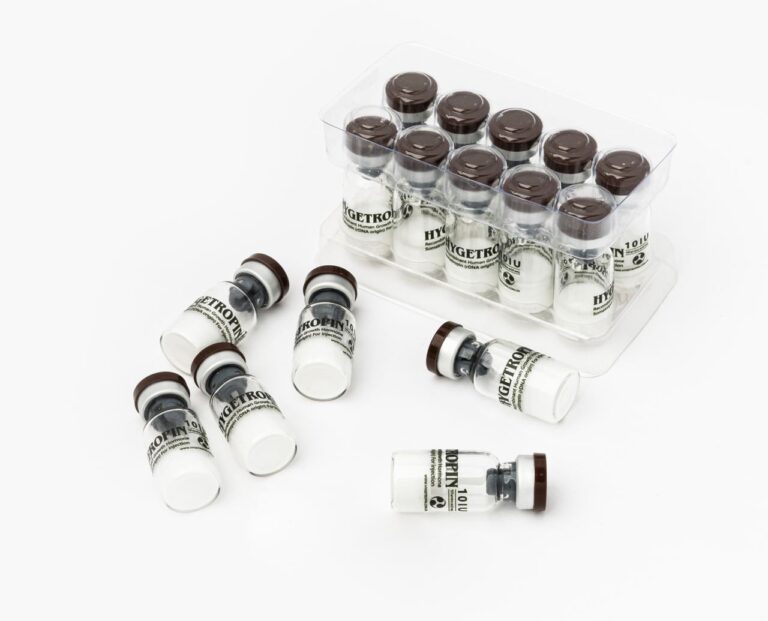
For those aiming to support lean muscle development and overall recovery, high-quality human growth hormone products may complement a consistent training and nutrition routine. One option often discussed in educational resources is Jintropin HGH 100IU Premium , designed to provide pharmaceutical-grade HGH support for muscle preservation, metabolic efficiency, and recovery.
Growth Hormone and Muscle Mass: The Big Picture
Growth hormone does not directly cause rapid muscle size increases. Instead, it influences muscle mass through supportive biological processes that make muscle growth more sustainable over time.
Rather than asking, “Does growth hormone build muscle?”, a more accurate question is:
“How does growth hormone create an environment where muscle can be preserved, repaired, and improved?”
How Growth Hormone Supports Muscle Development
1. Muscle Repair and Regeneration
Resistance training causes microscopic damage to muscle fibers. Growth hormone supports the repair and regeneration of this tissue by stimulating:
- Protein synthesis pathways
- Satellite cell activation
- Tissue remodeling
Improved repair capacity allows muscles to adapt more efficiently to training stress.
2. Lean Mass Preservation
One of the most important but overlooked roles of growth hormone is muscle preservation. This becomes especially relevant:
- During calorie deficits
- With aging
- During high training volumes
Preserving lean mass helps maintain strength, metabolic rate, and functional performance.
3. IGF-1 Mediation
Growth hormone stimulates the liver and peripheral tissues to produce Insulin-Like Growth Factor-1 (IGF-1), a key signaling molecule involved in:
- Muscle cell growth
- Tissue regeneration
- Structural adaptation
IGF-1 is often considered the primary mediator of growth hormone’s effects on muscle tissue.
4. Improved Connective Tissue Health
Muscle performance depends heavily on tendons, ligaments, and fascia. Growth hormone supports collagen synthesis, which contributes to:
- Stronger connective tissue
- Reduced injury risk
- Improved force transmission
This is one reason growth hormone is often associated with better long-term training durability.
Boost Recovery & Lean Mass with ZPtropin HGH 320IU
Pharmaceutical-grade HGH designed to support muscle preservation, recovery, and metabolic efficiency. Ideal for long-term body composition goals.
View ZPtropin HGH 320IUGrowth Hormone and Body Composition
Fat Metabolism and Muscle Visibility
Growth hormone promotes lipolysis, the process by which stored fat is released for energy. While this does not directly increase muscle size, it improves body composition, making existing muscle more visible and defined.
Muscle mass and fat mass are metabolically interconnected. Reducing excess fat while preserving muscle enhances overall physique and performance.
Metabolic Efficiency
Growth hormone influences how the body partitions nutrients—whether calories are directed toward fat storage or tissue repair. Improved metabolic efficiency supports lean mass maintenance over time.
Natural Growth Hormone Decline and Muscle Mass
Age-Related Changes
Natural growth hormone production peaks during adolescence and gradually declines with age. This decline is associated with:
- Slower muscle recovery
- Increased fat accumulation
- Reduced lean mass
- Lower exercise tolerance
These changes help explain why maintaining muscle becomes more challenging over time, even with consistent training.
Training Adaptation Over Time
As growth hormone output decreases, recovery capacity becomes a limiting factor. This does not prevent muscle growth, but it does mean:
- Progress may slow
- Injury risk may increase
- Recovery strategies become more important
Understanding this helps set realistic expectations and emphasizes lifestyle optimization.
Growth Hormone vs. Direct Muscle-Building Agents
Growth hormone is often compared to anabolic substances, but their mechanisms are fundamentally different.
| Aspect | Growth Hormone | Resistance Training |
|---|---|---|
| Speed of Effect | Gradual | Moderate |
| Muscle Quality | Lean, dense | Size + strength |
| Recovery Support | High | Depends on rest |
| Fat Loss Support | Yes | Yes |
| Injury Prevention | Indirect | Depends on technique |
Growth hormone functions as a support hormone, not a replacement for training.
Factors That Influence Muscle Mass Outcomes
Sleep Quality
Deep sleep is the most powerful natural stimulator of growth hormone. Poor sleep disrupts:
- Hormonal balance
- Recovery processes
- Muscle repair
Chronic sleep deprivation significantly reduces muscle-building efficiency.
Nutrition Quality
Muscle tissue requires adequate nutrients to grow and repair. Growth hormone cannot compensate for:
- Insufficient protein intake
- Chronic calorie deprivation
- Micronutrient deficiencies
Nutrition provides the building blocks; hormones regulate how efficiently they are used.
Training Stimulus
Growth hormone supports adaptation, but resistance training provides the stimulus. Without progressive overload, muscle growth remains limited regardless of hormonal status.
Stress and Cortisol
Chronic stress elevates cortisol, a hormone that counteracts muscle-building processes. Elevated cortisol can:
- Increase muscle breakdown
- Impair recovery
- Reduce insulin sensitivity
Stress management is therefore indirectly essential for muscle development.
Muscle Growth Expectations: What Is Realistic?
Growth hormone contributes to muscle mass slowly and subtly. Outcomes commonly discussed in scientific literature include:
- Improved muscle density
- Better recovery between sessions
- Enhanced connective tissue strength
- Gradual increases in lean mass
Growth hormone is best viewed as a long-term investment, not a short-term accelerator.
Common Myths About Growth Hormone and Muscle Mass
Myth 1: Growth Hormone Causes Rapid Muscle Growth
Reality: Muscle hypertrophy requires mechanical tension and metabolic stress.
Myth 2: Growth Hormone Works Without Training
Reality: Training provides the signal; hormones support adaptation.
Myth 3: Higher Hormone Levels Equal Better Results
Reality: Hormonal balance matters more than excess.
Myth 4: Growth Hormone Replaces Sleep and Nutrition
Reality: Sleep and nutrition are foundational, not optional.
Growth Hormone and Athletic Longevity
One of the most underappreciated benefits of growth hormone is its association with long-term training sustainability. By supporting recovery and connective tissue health, growth hormone contributes to:
- Fewer overuse injuries
- Better joint resilience
- Longer training careers
This is especially relevant for individuals who train consistently over many years.
Safety, Ethics, and Medical Responsibility
Growth hormone is a prescription hormone in many regions. Improper or unsupervised use may affect:
- Blood sugar regulation
- Insulin sensitivity
- Hormonal balance
- Long-term metabolic health
Educational information should never be interpreted as medical advice. Any hormone-related decision should involve qualified healthcare professionals and appropriate testing.
Growth Hormone in the Context of Longevity
Beyond muscle mass, growth hormone is closely tied to:
- Cellular repair
- Tissue regeneration
- Bone density
- Functional independence
Maintaining muscle is not just aesthetic—it is strongly linked to health, mobility, and quality of life as people age.
Frequently Asked Questions About Growth Hormone for Muscle Mass
1. What is growth hormone and how does it help build muscle?
Answer: Growth hormone (HGH) is a natural hormone produced by the pituitary gland that regulates muscle growth, protein synthesis, and fat metabolism. Supplementing or optimizing HGH levels in men can help increase lean muscle mass, improve recovery, and enhance strength, supporting bodybuilding and athletic performance.
2. How does HGH work in the body for muscle gain?
Answer: HGH stimulates the liver to produce IGF-1 (Insulin-like Growth Factor 1), which promotes muscle cell growth, protein synthesis, and tissue repair. It also supports fat metabolism, helping to reduce body fat while maintaining or increasing muscle mass.
3. What are the benefits of HGH for muscle mass?
Answer: Key benefits include:
- Increased lean muscle growth
- Improved fat loss and body composition
- Faster recovery after workouts
- Enhanced strength, endurance, and energy
- Support for joint health and connective tissue
- Anti-aging effects such as improved skin elasticity
4. What is a realistic expectation for muscle gains with HGH?
Answer: HGH is not a magic steroid. Realistic results include gradual muscle growth, improved recovery, and better body composition over 3–6 months. Gains are maximized when combined with resistance training, cardio, and a high-protein diet.
5. What is the recommended HGH dosage for muscle growth?
Answer: Evidence-based dosages typically range from 2–4 IU per day, sometimes divided into multiple injections per week. Dosage should be personalized based on age, weight, and health status, and IGF-1 levels should be monitored to ensure safety.
6. Are there side effects of HGH for muscle mass?
Answer: When used at proper doses, HGH is generally safe. Potential side effects from overuse include:
- Joint pain or stiffness
- Fluid retention
- Insulin resistance or elevated blood sugar
Regular monitoring of IGF-1 and blood markers helps prevent complications.
7. Can HGH replace proper training and nutrition?
Answer: No. HGH enhances muscle growth, fat loss, and recovery, but strength training and a balanced diet are essential for optimal results. HGH works best as part of a comprehensive bodybuilding plan.
Key Takeaways
- Growth hormone supports muscle mass indirectly and gradually
- Recovery and tissue repair are its primary roles
- Training, nutrition, and sleep remain foundational
- Muscle quality often improves more than sheer size
- Long-term consistency matters more than short-term optimization
Conclusion
Growth hormone plays a meaningful role in muscle preservation, recovery, and long-term body composition, but it is not a shortcut to rapid muscle growth. Its value lies in supporting the biological systems that allow training, nutrition, and recovery to work more effectively over time.
When understood correctly, growth hormone fits into a holistic framework of muscle development, where physiology, lifestyle, and consistency determine success—not isolated variables.